



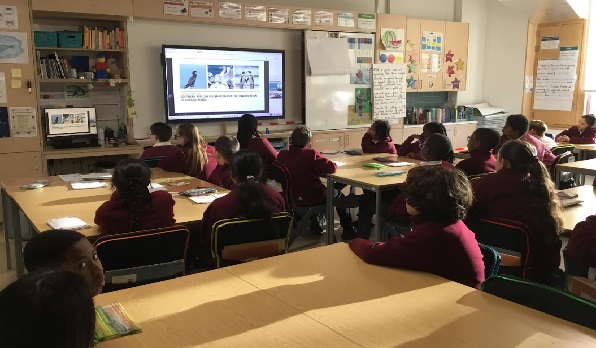
Year 6 had the privilege of meeting our newly adopted penguin, ‘Pibbles’. This special occasion was documented by one of our Science Ambassadors, Zakhar, who has prepared the following report:
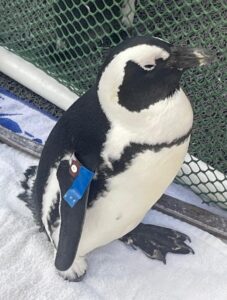 African Penguin Facts and Conservation Efforts
The African penguin faces several major threats, including overfishing, pollution, and oil spills. Back in the 1930s, their population was around 2 million, but today fewer than 10,000 remain, making them an endangered species.
SANCCOB, a conservation organisation founded in 1968, plays a vital role in rescuing and rehabilitating these penguins. They feed penguin chicks a special fish smoothie and provide care for injured birds. Some penguins become permanent residents because their injuries would make survival in the wild impossible. SANCCOB has two main areas: one for permanent residents and another for rehabilitation and hospital care. They even have facilities for surgery, including procedures where damaged limbs are amputated and replaced with prosthetics.
Before releasing penguins back into the wild, SANCCOB conducts DNA tests to ensure proper identification. Penguins are loyal creatures, staying with their chosen partner for life. In captivity, they can live for 30 to 40 years. Our adopted penguin, Pibbles, swims for about three hours a day and has a slightly above-average weight. Penguins at SANCCOB are fed sardines, and their towels are washed daily to maintain hygiene.
SANCCOB does not receive government funding and relies on donations to continue its work. Today, there are very few African penguin colonies left, making these efforts crucial for their survival.
The African penguin will become extinct by 2035.
‘That’s only 10 years away! We should save them!’
Henry